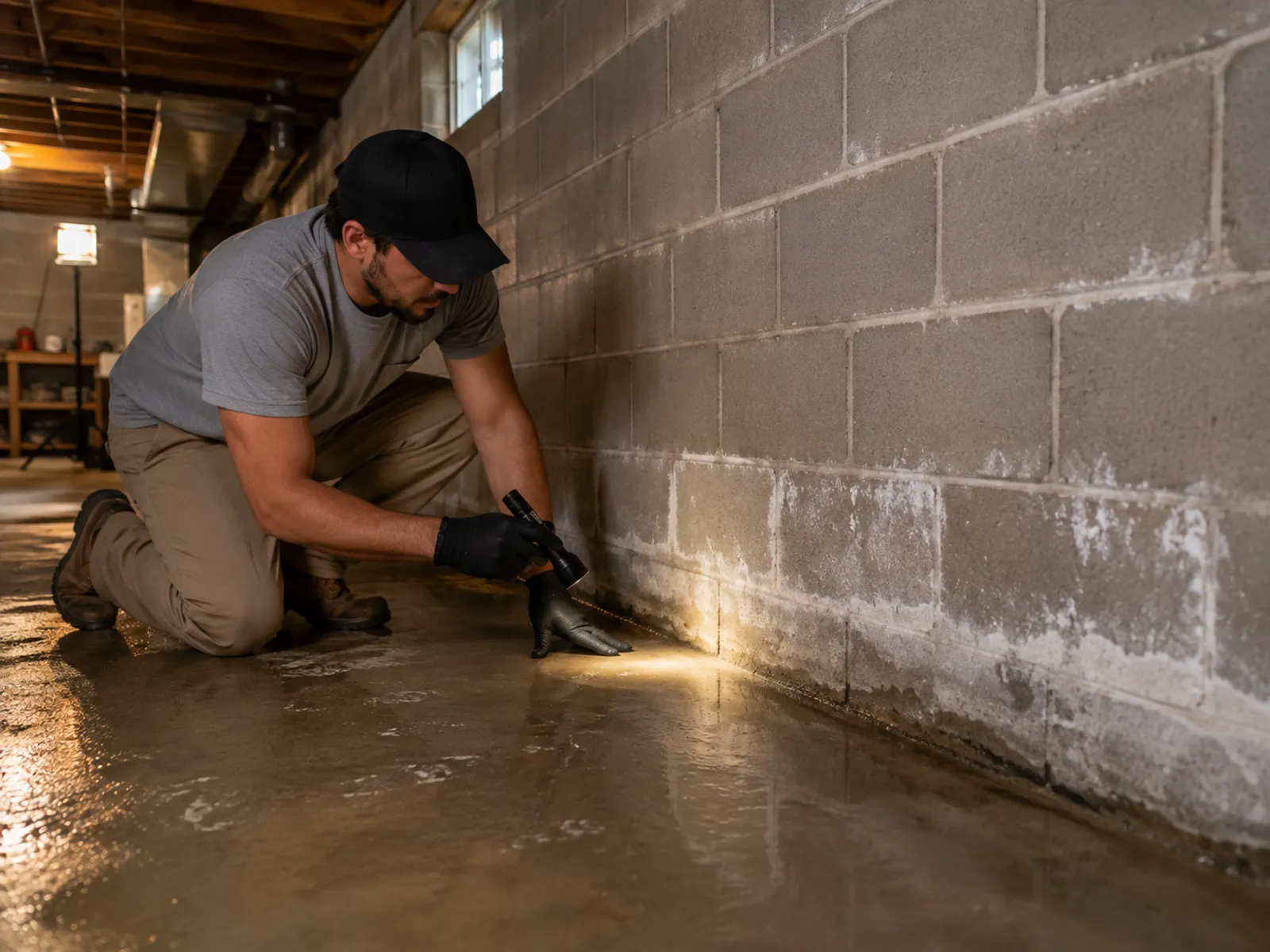
Wet Basement Repair for Washington's Older Homes
Stone foundations and early block, built before waterproofing existed. They can still be dry; that's the whole point of the retrofit.
724-213-7803Washington's Homes Are the Oldest in the County
Washington's housing tells its age honestly: much of it dates to the Victorian era and the early 1900s, with plenty of postwar stock as well. Under the older homes sit stone foundations and the earliest generations of block, walls built before footer drains, waterproofing membranes, or sump pumps were part of how anyone built anything. That's the housing reality this page is written for.
Those basements were damp in a gentler climate. Pennsylvania's Climate Impacts Assessment documents a roughly 71% increase in extreme rainfall events across the Northeast since 1958, and decades of wetter weather land hardest on exactly the foundations that never had modern defenses to begin with. The good news runs the other way too: the retrofit toolbox built for these houses is deep, proven, and permanent.
Basement trouble in Washington? Talk to someone who knows the area.
Call 724-213-7803Fixing Wet Basements in Washington's Older Homes
Seepage at the floor, damp stone that never fully dries, water tracking in after every hard rain: symptom-first is the right way to start, because in old basements the entry paths are plural. Wet basement repair finds them and closes them in the order that matters.
Foundation Repair for a Century of Settling
Old walls carry old movement: stair-step cracks in early block, bowing under decades of clay pressure, corners that settled before your grandparents' time and started again in the wet years. And in coal country, settling has one more suspect worth ruling out: mine subsidence, which the state takes seriously enough to insure separately. Foundation repair sorts ordinary movement from the exceptions and stabilizes both.
Interior French Drains for Older Basements
A stone or early-block basement can't be rebuilt around modern drainage, but modern drainage can be built into it. An interior French drain at the footer gives a century-old basement what 1900 couldn't: a dedicated path that collects water and removes it before the floor ever sees it.
Exterior Waterproofing for Stone and Early Block
Where access allows, sealing the wall from the outside (exterior waterproofing with excavation, membrane, and new footer drainage) gives an old wall the barrier it was born without. It's the most complete fix for walls that weep through their face.
Sump Pumps for Homes Built Without Them
Plenty of older basements were built without a pit or pump; water simply came and went with the seasons. A first sump pump installation, placed at the true low point with a proper pit and discharge, is often the single biggest step an old basement takes toward staying dry.
Crawl Space Encapsulation for Washington's Older Homes
Older homes and their additions often sit partly over dirt-floored crawl spaces that have breathed ground moisture into the house for generations. Encapsulation seals that off: drier air upstairs, protected framing below.
Straight Answers for Old Houses
Old basements reward experience: the fix that suits a 1990s colonial can be wrong for 1895 stone. Call and describe the house (its age, its walls, what the water does) and get a read grounded in what these buildings actually are. Also serving Canonsburg, Peters Township, and all of Washington County.
Questions, Answered
My Washington house has a stone foundation that has always seeped. Can it really be waterproofed?
Yes, with the right approach. Stone walls are irregular and porous, so surface coatings tend to fail against them. What works is managing the water: an interior drainage system at the footer that collects what the wall lets through and moves it to a sump pump before it reaches the floor. The wall keeps its character; the basement stops keeping water.
Could the cracks in my foundation be mine subsidence?
Most foundation cracks in Washington trace to ordinary causes: clay soil pressure, water, and age. But much of Washington County does sit above abandoned underground mines, and subsidence is real enough that Pennsylvania has run a dedicated Mine Subsidence Insurance program since 1961, precisely because standard homeowner’s policies exclude it. The DEP maintains a public map for checking a specific property. A professional look at the crack pattern is the practical first step; soil and water problems are far more common, and far more fixable.
Send the Details
What you're seeing, and where. Someone local will reach out.
Serving Washington and all of Washington County.
Call 724-213-7803