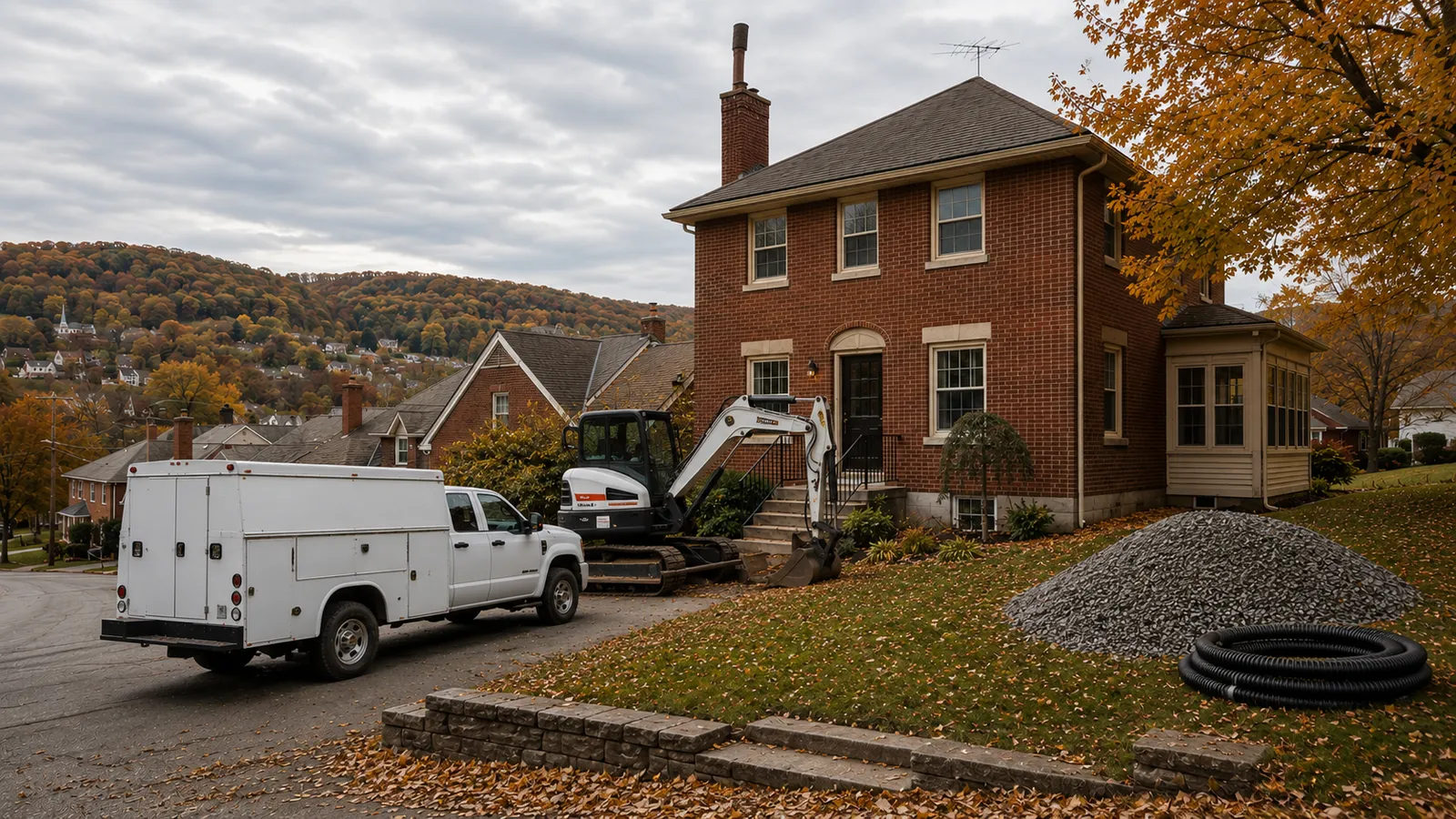
Basement Waterproofing in Peters Township, McMurray & Venetia
The township's basements are finished, carpeted, and sitting on forty-year-old drainage. Get ahead of the next wet spring.
724-213-7803A Township That Grew Up Fast, and Basements That Show It
Peters Township went from about 3,000 residents in 1950 to roughly 23,000 today, which means its housing stock is overwhelmingly suburban development from the 1960s through the 1990s. That's a specific inheritance: finished basements where water damage costs real money, builder-grade footer drains and sump systems now decades past their design life, and hillside lots where settling and downhill runoff do slow, patient work. This isn't century-home territory; it's first-generation-infrastructure territory, and the first generation is wearing out.
It's wearing out under rainfall it was never engineered for. The Pittsburgh area's records go back to 1871, and 2018 was the wettest year ever recorded: 57.8 inches. March 2026 was the wettest March. These houses were built for a climate that delivered around 36 inches a year; a drainage system installed in 1978 is now asked to handle fifty.
Peters Township, McMurray, and Venetia are one community: one school district, one identity, and the same ground. Whichever name your mail carries, the water story below is yours.
Basement trouble in Peters Township? Talk to someone who knows the area.
Call 724-213-7803Wet Basement Repair in Peters Township
A finished basement changes the math on water. In an unfinished basement, seepage is a mop-up; behind drywall and carpet, it's a demolition estimate, and the evidence hides until the damage is established. The signs come subtle here: a musty edge to the rec room, a stain climbing a baseboard, tile grout that darkens after storms. Wet basement repair traces the water to its entry point and closes it, ideally before the finished space pays the tuition. If the basement was finished by a previous owner, the smart money says find out what the drainage under it looks like before the next record spring finds out for you.
Foundation Repair on Peters Township's Hillside Lots
The township's growth pushed development onto slopes, and southwestern Pennsylvania is the most landslide-prone region in the state. Ground that moves is a local fact of life, not an exception. On hillside lots, clay swells against the uphill wall when saturated and shrinks away in dry spells, and corners settle where fill was placed decades ago. Stair-step cracks, a wall beginning to bow, doors that rub every spring: foundation repair answers with crack injection, wall stabilization, and helical piers that reach ground that doesn't move. Freeze-thaw does its part too. Every winter opens hairline cracks a little further, and every wet spring finds them. The earlier movement gets stabilized, the simpler and cheaper the fix stays.
French Drain Installation in McMurray
Original footer drains from the township's building boom are now forty to sixty years old, and clay-heavy soil silts them shut from the outside in. When the original perimeter drainage quits, the modern answer is an interior French drain at the footer: a retrofit that replaces the failed system without excavating the yard, feeding a properly sized sump. On sloped McMurray lots, yard and curtain drains uphill of the house intercept runoff before it arrives, and the same slopes often let a drain discharge to daylight, so gravity does work a pump would otherwise have to.
Sump Pump Replacement Across Peters Township
If your house still runs the pump it was built with, you're overdue by decades, not years; pumps are 7-to-10-year machines asked to work hardest during exactly the storms that cut power. Sump pump replacement with a battery backup is the single highest-leverage upgrade a finished Peters Township basement can buy: it's what stands between a power outage in a downpour and everything the carpet cost.
Exterior Basement Waterproofing in Peters Township
Homes set into slopes take water against their uphill wall year after year, and some walls need the fix applied on the side the water comes from. Exterior waterproofing (excavation, membrane, drainage board, new footer drain) resets that wall to better than original, with modern materials the 1970s never had: true waterproof membranes instead of the thin damp-proofing coat these houses got when they were built, and drainage board that keeps saturated clay from ever bearing on the wall again.
Crawl Space Encapsulation in Venetia
Toward Venetia and the township's edges, homes and additions often ride partly on crawl spaces. Vented and bare-floored, they feed damp air into the rooms above: musty smells, cold floors, insulation quietly failing. Humid summers make it worse, as outside air pours through open vents and condenses in the cool dark under the floor. Encapsulation seals the ground under a heavy vapor barrier, closes the vents, and dries the space for good, and a compact sump handles any water the ground sends up.
The Peters Township Water Calendar
Water trouble here keeps a schedule. Late winter and early spring are the stress test: snowmelt and cold rain land on ground that's already saturated, the clay stops absorbing anything, and every original footer drain and forty-year-old pump in the township gets asked for its best work at once. March 2026, the wettest March on record, ran exactly that experiment. Summer brings the other failure mode: thunderstorms that drop an inch in an hour and take the power out mid-storm, which is precisely when a pump without a battery backup goes quiet. Basements that make it to autumn dry usually stay that way until the cycle starts again. If yours has a season, that's not a mystery; it's a diagnosis, and it's worth describing on the phone.
What Peters Township Basements Actually Need
Most Peters Township homes belong to one generation of building, and they share one failure profile: original drainage aging out underneath finished rooms, on ground that moves, in a climate delivering rain the builders never budgeted. That's why the fixes here lean toward renewal: interior drainage that replaces the original footer system, sump pumps sized for today's heavier rain, and battery backups for the summer storms that cut the power. One call gets you someone who starts from that reality. Describe the house and what you're seeing, and you'll get a straight read on what it means. Also serving Canonsburg, Washington, and all of Washington County.
Questions, Answered
A previous owner finished our basement. How do I know if water is a risk back there?
Look at the edges: a musty smell that deepens near the carpet line, baseboard staining, paint bubbling low on the walls, or a sump pit that runs more than it used to. Finished walls hide the first year of evidence, which is why Peters Township basements often announce a water problem late, and expensively. If the house predates you, finding out what is behind the drywall before a wet spring does is the cheapest inspection you will ever commission.
The house was built in the 1980s and still has its original sump pump and footer drains. Is that a problem?
It is the single most common problem in the township. Builder-grade pumps were never designed to run for forty years, and original footer drains silt toward failure quietly; everything works until the first storm it doesn’t. If your system is original to a 1960s–1990s house, an assessment now beats a discovery in March.
Does Little Chartiers Creek affect basements in Peters Township?
The creek itself touches few properties, but the valley it drains is the low point the township’s groundwater works toward. Homes on the slopes above it shed water downhill; homes near the bottoms receive it. Where your house sits in that path shapes which fix makes sense, which is exactly the kind of thing one call sorts out quickly.
Send the Details
What you're seeing, and where. Someone local will reach out.
Serving Peters Township, including McMurray and Venetia, and all of Washington County.
Call 724-213-7803